Introduction
Travel is often portrayed as exciting, refreshing, and liberating. Social media feeds are filled with smiling faces at destinations, scenic views, and carefully curated moments of joy. What’s rarely shown, however, is the mental strain that happens in between particularly during travel transitions. These transitions, especially airport arrivals, carry a hidden psychological cost that can shape a traveler’s entire experience before the trip even truly begins.
The mental cost of travel transitions refers to the cognitive and emotional burden travelers experience while moving from one environment to another. From the moment a flight lands to the point of reaching the final destination, travelers are required to process unfamiliar information, make decisions under fatigue, and manage uncertainty all at once.
Understanding the Mental Cost of Travel
The human brain thrives on familiarity and predictability. Travel disrupts both. Long flights, time-zone changes, and crowded airports already drain mental energy. Upon arrival, travelers are immediately faced with new tasks clearing immigration, collecting luggage, finding exits, arranging transportation, and ensuring personal safety.
These tasks might seem simple individually, but when stacked together after hours of travel, they create cognitive overload.
Common mental stressors during arrival include:
- Physical exhaustion and jet lag
- Sensory overload from noise, crowds, and signage
- Fear of making wrong decisions
- Anxiety about delays or missed connections
- Uncertainty about transport costs and routes
- Language or cultural barriers
This mental pressure often peaks within the first hour after landing, making arrival the most emotionally fragile stage of travel.
Why Travel Transitions Are More Stressful Than the Journey Itself
Interestingly, many travelers report feeling more stressed after landing than during the flight. This is because flights are passive experiences you sit, wait, and follow instructions. Arrivals, on the other hand, demand action, awareness, and decision-making at a time when mental energy is already low.
This phenomenon is known as decision fatigue, where the brain struggles to process choices after extended exertion. When travelers must choose between taxis, ride-hailing apps, public transport, or unfamiliar routes, stress intensifies.
As a result:
- Minor inconveniences feel overwhelming
- Small delays cause frustration
- First impressions of the destination suffer
The Psychological Impact of Poor Arrival Experiences
A stressful arrival doesn’t just affect the moment it can influence the entire trip. Studies in behavioral psychology show that first impressions have a lasting effect on perception and memory. If a traveler’s first interaction with a city feels chaotic or unsafe, that emotional tone often carries forward.
Poor arrival experiences can lead to:
- Negative destination perception
- Reduced satisfaction with accommodations
- Increased anxiety throughout the trip
- Lower likelihood of return visits
- Negative reviews or word-of-mouth
This makes arrival experiences not just a logistical concern, but a psychological one.
How the Travel Industry Can Reduce Mental Travel Costs
1. Predictability Over Flexibility
Travelers feel calmer when they know what to expect. Clear communication about arrival procedures, transport options, and travel time reduces uncertainty.
2. Pre-Arranged Transportation
One of the most effective ways to reduce mental load is pre-booked airport transfers. When travelers don’t need to negotiate fares, search for vehicles, or worry about directions, mental stress drops instantly.
3. Clear Human Touchpoints
Seeing a professional driver waiting with a name board offers immediate reassurance. It signals safety, reliability, and control three things tired travelers crave.
4. Comfort as a Mental Reset
A quiet, clean vehicle provides a psychological pause. It allows travelers to mentally transition from travel mode to arrival mode, helping them regain emotional balance.
Why This Matters Even More Today
Modern travelers are more aware of mental well-being than ever before. They don’t just want to arrive they want to arrive feeling calm, safe, and in control. The expectation has shifted from simply “getting there” to “feeling good while getting there.”
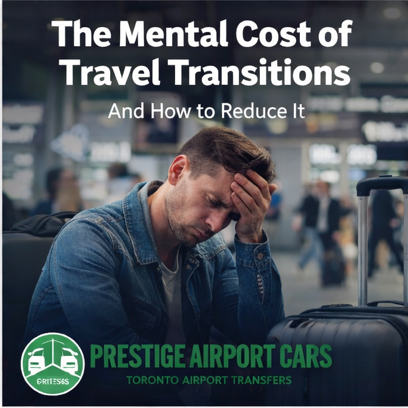
For frequent travelers, business travelers, families, and international visitors, minimizing mental stress is no longer a luxury it’s a necessity.
The First Hour Shapes the Entire Experience
The first hour after landing often determines:
- How travelers perceive a destination
- How they evaluate service quality
- How relaxed or anxious they feel during the trip
When arrivals are smooth, travelers start their journey with confidence. When they’re stressful, even the best experiences later may struggle to compensate.
Conclusion
The mental cost of travel transitions is real, measurable, and often underestimated. While destinations focus heavily on attractions, accommodations, and experiences, the arrival process quietly sets the emotional foundation for everything that follows.
Reducing this mental cost through thoughtful planning, reliable transportation, and human-centered design isn’t just good hospitality it’s smart travel strategy.
In travel, how you arrive matters just as much as where you go.